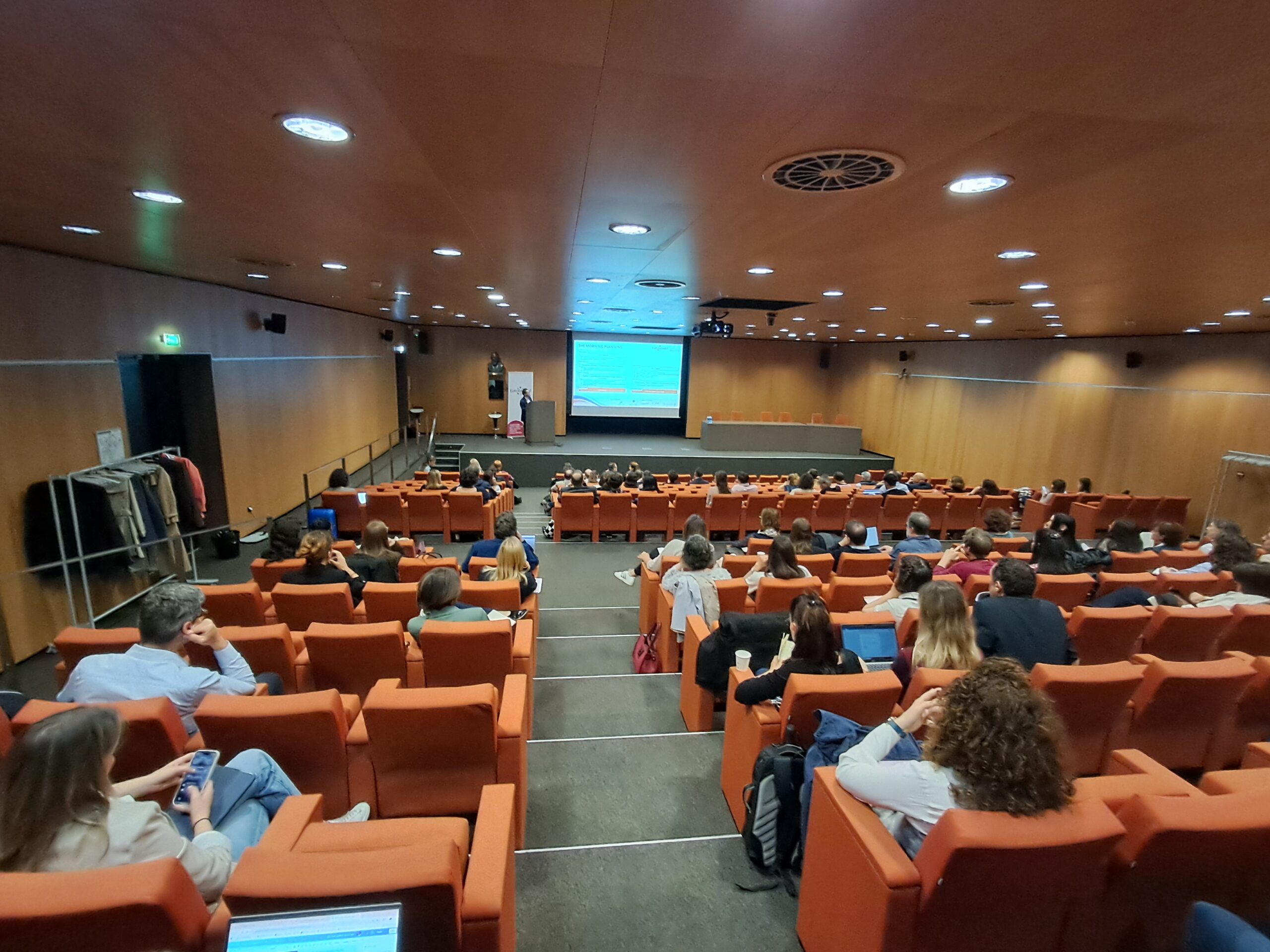
Skin balance relies on complex dynamic interactions between skin compartments, immune cells, microbiota, and extracellular matrix. When this balance breaks down, pathologies emerge. To explore these mechanisms, Eurobiomed organized the conference « Exploring Skin Health and Homeostasis: Insights From Biology, Technology and Clinics » on Tuesday, May 5, 2026, at IUCT Toulouse. Researchers, clinicians, startups, and industry players gathered to share their advances in understanding and treating skin dysfunctions.
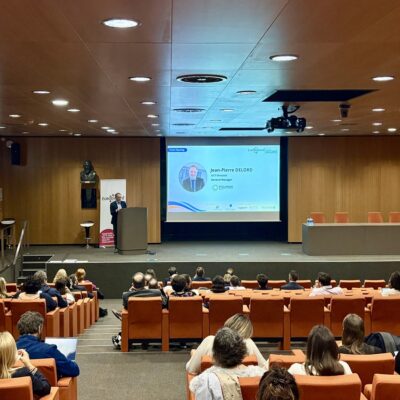 The event highlighted the significant role of the microbiota in maintaining skin homeostasis. « The microbiota is a central regulator of skin homeostasis, » stated Pascale Bianchi from Pierre Fabre Laboratories. This assertion takes on its full meaning when we consider that we are composed of more than 50% bacteria. These microorganisms do not simply coexist with our skin: they actively participate in its protective and reparative functions. Cécile Clavaud from L’Oréal specified that « microbiome markers predict early aging, » opening perspectives for the development of targeted anti-aging strategies.
Ichtyosis as an example of genetic disruption of homeostasis
Epidermal differentiation disorders (EDD), of which ichthyosis is the best-known example, constitute a particularly instructive example of genetic disruption of homeostasis. Juliette Mazereeuw-Hautier from Toulouse University Hospital emphasized the importance of precise diagnosis: « Our classification is very useful for innovative therapies: to provide what is lacking, to block what is in excess, to repurpose drugs, » she explained, illustrating how fundamental research directly feeds therapeutic development. The researcher also pointed out the limitations of current approaches: « As of today, the management of care of ichthyosis is based on old treatments, which can also create complications. » Facing these gaps, perspectives are opening thanks to better classification of pathologies.
With LC-OCT and AI algorithms, you can quantify the skin in 3D
Imaging technologies coupled with artificial intelligence are transforming the way skin is evaluated. Nastassia Pricoupenko from DAMAE Medical presented an innovative approach: « With LC-OCT and AI algorithms, you can quantify the skin in 3D. » This non-invasive technique allows cellular-resolution analysis, comparable to histology but without its drawbacks. Julie Przybylski from Pixience complemented this vision by emphasizing the importance of standardization: « Our approach is standardized ultra-high-definition imaging: with homogeneous light, color calibration. » These tools offer the possibility of developing objective biomarkers for various skin conditions, from aging to inflammatory pathologies.
More than 50% of patients suffering from metastatic melanoma now survive 10 years
Oncodermatology has experienced spectacular progress thanks to immunotherapies. Vincent Sibaud from IUCT-Oncopole recalled a remarkable advance: « Currently, more than 50% of patients suffering from metastatic melanoma have been surviving 10 years, this is amazing. » This survival rate, unthinkable a decade ago, demonstrates the effectiveness of new therapeutic approaches. However, these successes come with new challenges. « Nowadays we have to deal with the toxicity of immunotherapies, » the practitioner emphasized, reminding that these treatments generate various skin manifestations requiring specialized care.
Pitching innovative solutions
The ecosystem present in Toulouse demonstrated the diversity of innovative approaches in skin health. BioHive, Pixience, QIMA Life Sciences, Skinosive, BioMeca, Vaiomer, the French Blood Establishment (EFS), Genoskin, DAMAE Medical, Nîmes University Hospital, and DIVA Expertise presented their technological solutions. Among the speakers, Cécile Nait from BioHive highlighted impressive production capacity: « At BioHive, we have developed more than 6,000 skin organoids. » These three-dimensional models, developed from a simple hair, allow testing product efficacy while accounting for individual diversity.
William Richard from QIMA Life Sciences presented a complementary approach based on electrochemistry: « It takes one minute to get a skin sample, then one minute to do the test—in 2 minutes, we get an electrochemical assessment of the skin. » This speed of analysis opens perspectives for real-time monitoring of skin oxidative stress.
Agnès Menut from Skinosive presented work on next-generation photoprotection: « The goal is to get persistence on the skin for up to 8 hours, » thereby addressing the need for extended sun protection.
Pierre Fabre’s skin health strategy challenges
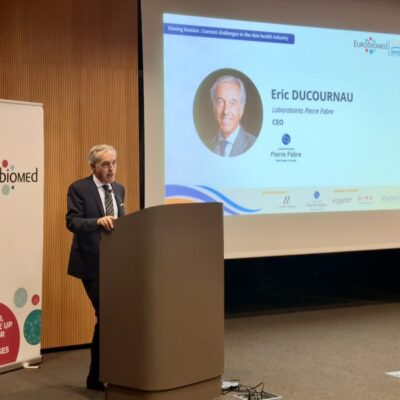 The Laboratoires Pierre Fabre Group shared its strategic vision. Eric Ducournau, CEO, recalled the weight of this activity: « Pierre Fabre is 3.2 billion of revenue, with 2.1 billion in skin health. » Facing sector transformations, the laboratory is adapting its strategy. « In developing our skin health strategy, we confront several major challenges: a reduction in the number of dermatologists, leading to fewer specialists capable of advising consumers; the appearance of new diseases; decreasing insurance reimbursements; and emerging drug resistance, » Eric Ducournau detailed. To address these challenges, the company relies on its pharmaceutical heritage: « Coming from the pharma industry, we are developing our products like drugs, » thus guaranteeing a high level of requirement in dermo-cosmeto-pharmaceutical development.
This day confirmed the vitality of the skin health ecosystem in southern France that Eurobiomed federates through the Skin Excellence cluster, the first internationally renowned innovation hub dedicated to skin health.
The conference benefited from the support of F.Initiatives, Laboratoires Pierre Fabre, Lucas Meyer Cosmetics, QIMA Life Sciences, and Vaiomer as sponsors, as well as Bio’Occ, Cancéropôle grand Sud Ouest, Toulouse University Hospital, CRCT, IUCT Toulouse, Tiers-Lieu Skin, and Enosis Santé as partners.