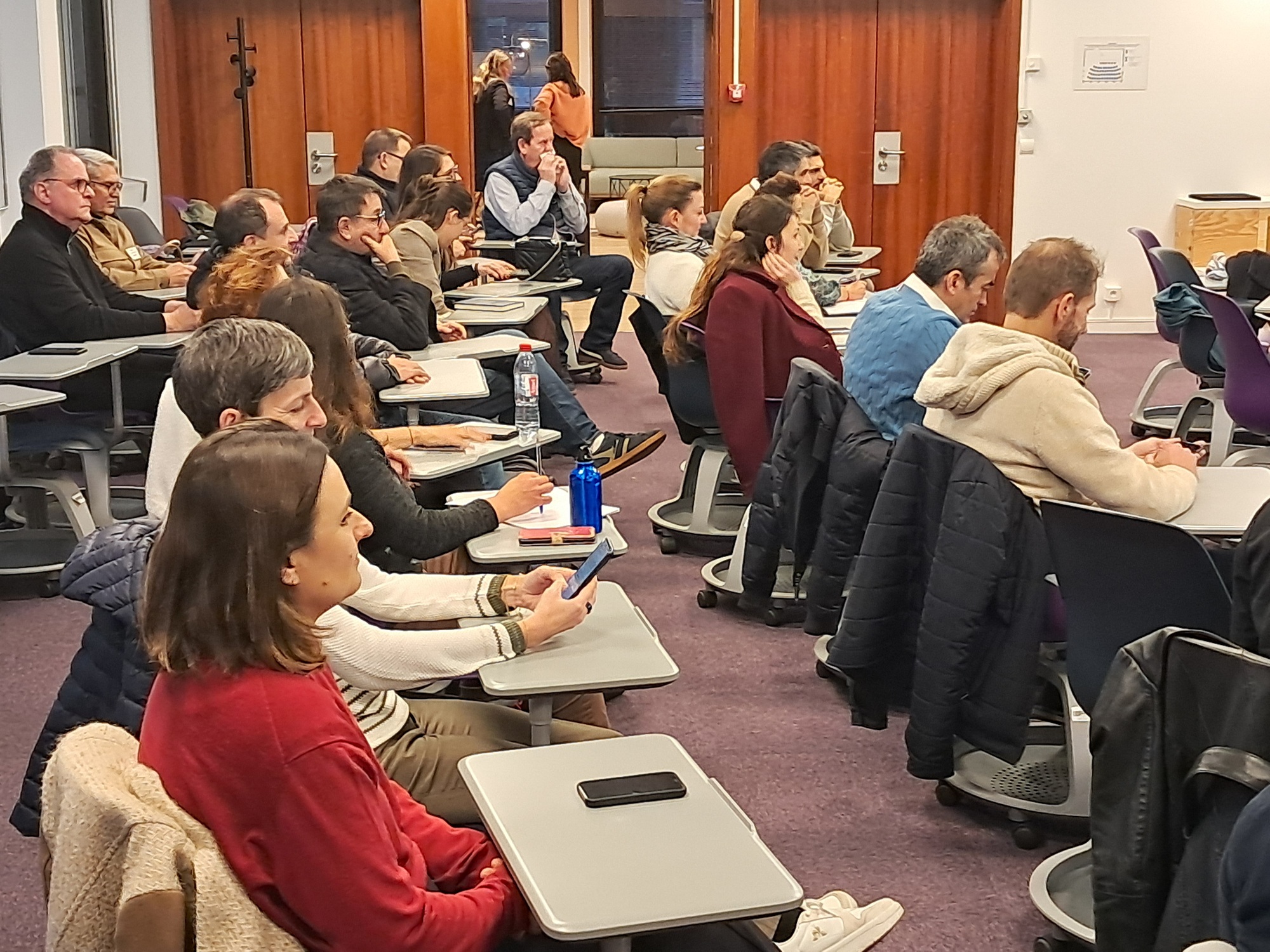
On Tuesday, February 10, 2026, the Inria Center in Sophia Antipolis hosted the first Biorézo event of the year in the Alpes-Maritimes region. Organized by Eurobiomed, this evening event brought together three innovative companies that use artificial intelligence to address challenges in the healthcare system: early diagnosis, medical deserts, and alternatives to invasive tests. The event illustrates the rise of digital technology in the region's healthcare ecosystem.
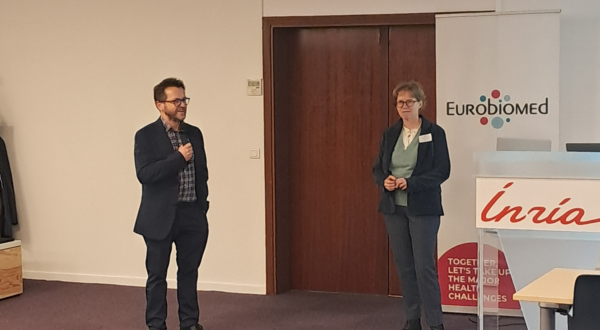
Emmanuel Le Bouder, Community Director at Eurobiomed, highlighted the sector's momentum: "Digital technology is at the heart of our business: 40% of our members have a digital component, either because they are purely digital players or because they incorporate artificial intelligence."
Maureen Clerc, director of the Inria center at Université Côte d’Azur, presented the institute's role: "Not only do we conduct research, but we are also a digital program agency for the government." INRIA oversees ten interconnected national programs and has a startup studio to support researchers in becoming entrepreneurs.
"No longer relying on feelings but on hard data"
Mikael Cohen, CSO and co-founder of Neuraccure, presented a high-precision neurological examination solution. "The rationale is that traditional neurological examinations have changed very little," he explained. The company has developed tests that assess fine motor skills, reaction times, and eye movements, among other things. 1,300 patients have been tested, mostly over the last three years, after ten years of project development.
"We are also working on concussions: our tests allow doctors to rely not only on their gut feeling, but also on quantified tests with performance indicators," explained Mikael Cohen. The company is particularly focused on the early detection of multiple sclerosis and is collaborating with rugby clubs. The next step will be to certify the device.
9 million French people without a primary care physician
Philippe Dedrie, CEO of Sunwaves-MedTech, presented a solution combining connected devices, artificial intelligence, and 24/7 human medical supervision. "We know that nine million French people do not have a primary care physician, and that 900,000 French people with long-term illnesses do not have a doctor," he pointed out.
The platform ensures the reliability of data from connected objects: "We have an artificial intelligence engine that collects and verifies this data, because connected objects emit 25 to 30% false positives: it is the AI that generates alerts, which are sent to a medical center." Healthcare professionals then carry out an analysis to confirm the findings. The solution is positioned as a scalable, international response to continuity of care.
"We can avoid 70% of biopsies."
Majdi Nagara, CEO of VirtuBiopsy, presented an alternative to traditional oncological biopsies. "In most cases, confirmation requires a biopsy, with an average wait time of 12 to 14 days to receive the diagnosis and a cost to the government of between €1,000 and €4,000," he said.
"With multimodal artificial intelligence, we can combine clinical assessment, medical imaging data, and genomic analysis to predict the risk of malignancy." According to Majdi Nagara, this approach can eliminate 70% of biopsies. Currently being developed for breast cancer with a working prototype, the project aims to create a multi-cancer platform by 2028.
In 2025, Eurobiomed celebrated its 20th anniversary, two decades that have enabled it to forge links with the entire innovation ecosystem and build up a network of experts that supports the companies it assists. This Biorézo event illustrates the cluster's commitment to promoting the growth and projects of innovative healthcare companies in its region. The event was made possible by the support of F.Initiatives, CIC Innovation, and ICOSA, and organized IN PARTNERSHIP WITH , reaffirming the synergies between public and private actors to position the region at the forefront of healthcare innovation.